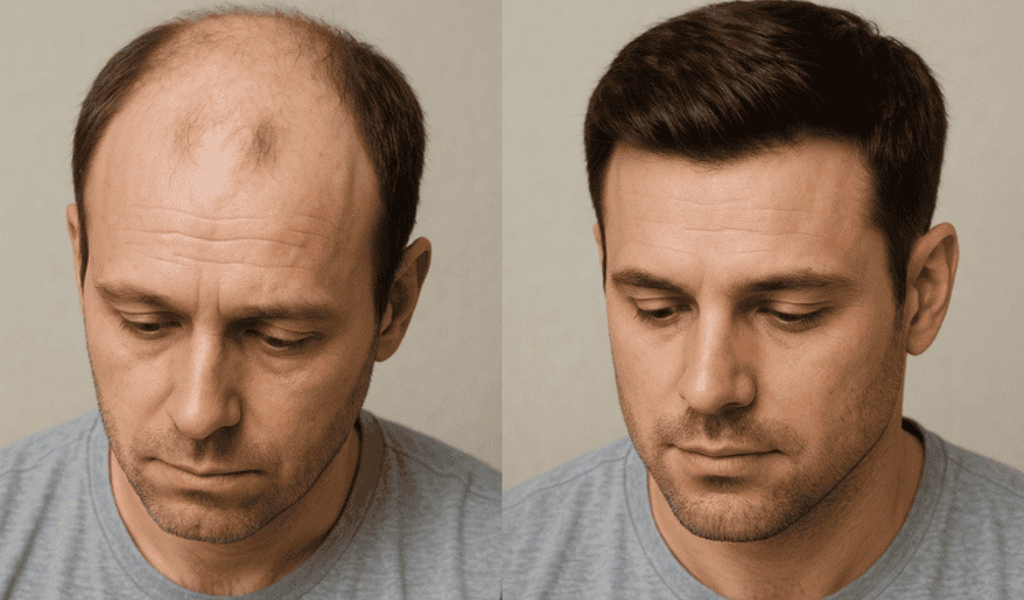
Hair loss can be unsettling. For some, it begins with a subtle receding hairline; for others, it shows up as thinning at the crown or patchy bald spots. Whatever the pattern, the question often arises: “Am I ready for a hair transplant?”
Deciding when to move forward isn’t just about vanity — it’s about timing, readiness, and ensuring long-term results. Below, we’ll explore the 10 key signs that indicate you might be ready for a hair transplant and why consulting an experienced specialist, like Dr. Vikas Kumar Verma, is essential to achieving natural results.
1. Noticeable Crown Thinning That Doesn’t Improve with Treatments
If you’ve tried topical solutions such as minoxidil or oral medications but your crown thinning continues to progress, it’s a strong indicator that surgery may be the next step. The crown is one of the most common areas for pattern baldness, and once medical treatments stop being effective, hair restoration surgery often provides the only permanent solution.
2. A Receding Hairline Forming an M-Shape
One of the classic signs of male pattern baldness is the M-shaped hairline. When the temples begin to recede, the forehead appears larger, and styling options become limited. This is a clear hair transplant readiness indicator since transplants can restore density in the hairline and temples, giving you a more youthful frame to your face.
3. Persistent Hair Shedding Despite Topical Treatments
Are you noticing excessive hair shedding even after months of topical applications or therapies? This means your follicles may no longer respond to non-surgical interventions. If treatments such as PRP therapy or over-the-counter solutions haven’t slowed down the process, it may be time to explore a long-term surgical option.
4. Temple Recession and Widening Forehead
The temple region often gives the earliest clues. If your forehead appears wider due to temple recession, this is more than just a cosmetic concern — it’s a progression sign. Addressing temple thinning early can prevent further scalp visibility and help preserve a natural balance.
5. Stable Hair Loss Pattern Confirmed by a Specialist
One of the most important medical criteria for candidacy is hair loss stability. Surgeons often use the Norwood scale to classify the degree of baldness. If your hair loss has stabilized and your donor area quality is strong, you’re likely a good candidate for a transplant.
👉 According to the American Society of Plastic Surgeons (ASPS), stability of hair loss and a strong donor area are the primary readiness factors before surgery.
6. Patchy or Uneven Hair Growth
Not all hair loss is uniform. Some people experience patchy bald spots or uneven thinning across the scalp, beard, or crown. In these cases, a transplant can strategically restore natural density and eliminate the “patchy look” that makes styling difficult.
7. Visible Scalp in Photos and Harsh Lighting
Have you noticed that your scalp shows more in selfies, under bright light, or in professional photos? This is one of the clearest visual readiness signs. When your scalp visibility affects confidence and appearance, a hair transplant becomes more than a cosmetic choice — it’s a confidence-restoring decision.
8. Genetic Baldness History in Family
If baldness runs in your family, it’s not just coincidence — genetic baldness is a major predictor. Men and women with a strong family history of pattern baldness should watch closely for early indicators. The earlier you seek professional evaluation, the better your chances of achieving optimal outcomes.
9. Realistic Expectations About Hair Transplant Results
Being ready for a transplant isn’t only about hair loss — it’s also about mindset. If you understand that results vary depending on donor hair availability, and you have realistic expectations about density and coverage, you’re mentally prepared. A skilled surgeon can create natural-looking outcomes, but not “Hollywood hair overnight.”
10. You’re Seeking a Permanent Solution for Hair Loss
Perhaps the strongest readiness sign is the desire for a permanent solution. If temporary fixes, concealers, or short-lived treatments no longer satisfy you, then it’s time to explore a procedure that restores lifelong growth and confidence.
Am I a Good Candidate for a Hair Transplant?
To summarize, here’s a quick hair transplant readiness checklist:
- Hair loss has stabilized
- Crown thinning or receding hairline is visible
- Topical treatments are no longer effective
- Strong donor area confirmed by specialist
- Realistic expectations about outcome
👉 Learn more about being a candidate here: Hair Transplant in Dubai
Professional Guidance – Why Expertise Matters
A hair transplant is a surgical procedure, and outcomes depend heavily on the surgeon’s expertise. Dr. Vikas Kumar Verma, a board-certified plastic surgeon, specializes in advanced hair restoration techniques including FUE (Follicular Unit Extraction) and FUT (Follicular Unit Transplant).
👉 If you’re considering this journey, start with a consultation: FUE Hair Transplant in Dubai
Risks of Ignoring Hair Loss Progression
Delaying evaluation can have consequences:
- Donor area limitations if hair loss advances too far
- Reduced density options
- Psychological impact from ongoing confidence loss
👉 According to the Dubai Health Authority (DHA), early medical consultation ensures better long-term treatment outcomes in aesthetic procedures.
Next Steps – Consultation and Evaluation
Your next move should be scheduling a professional consultation. During this process, your surgeon will:
- Evaluate your scalp and donor area
- Classify your hair loss on the Norwood scale
- Discuss realistic goals and expectations
- Provide treatment options (surgical and non-surgical)
👉 Explore more treatments: Plastic Surgery in Dubai
Conclusion
If you’ve recognized yourself in several of these 10 signs, it may be time to explore hair transplantation seriously. With the expertise of a skilled plastic surgeon like Dr. Vikas Kumar Verma, you can restore not just your hair but also your confidence and quality of life.
Hair restoration isn’t about vanity — it’s about self-assurance, presentation, and embracing life with confidence.
FAQs (Voice Search Optimized)
Q1. Am I ready for a hair transplant if I’m still shedding?
Not necessarily. Surgeons often wait until hair loss stabilizes before recommending surgery.
Q2. What age is best for a hair transplant?
Most patients are between 25–50 years, but candidacy depends on stability, not age.
Q3. Can women also be candidates for hair transplant surgery?
Yes, especially women experiencing genetic thinning or patchy loss.
Q4. How do I know if my donor area is good enough?
A specialist examines density, thickness, and stability of your donor hair.
Q5. How long should I wait before considering surgery?
If you’ve had stable hair loss for at least 12 months and treatments haven’t worked, now may be the right time.